Mastering Typography
January 31, 2024


Location can be a powerful tool in digital advertising. It can help organizations reach audiences in priority markets, connect with people attending relevant events, or reengage consumers based on the places they have visited.
Two common approaches are geotargeting and geofencing. While the terms are sometimes used interchangeably, they refer to different campaign strategies.
The simplest way to remember the distinction is:
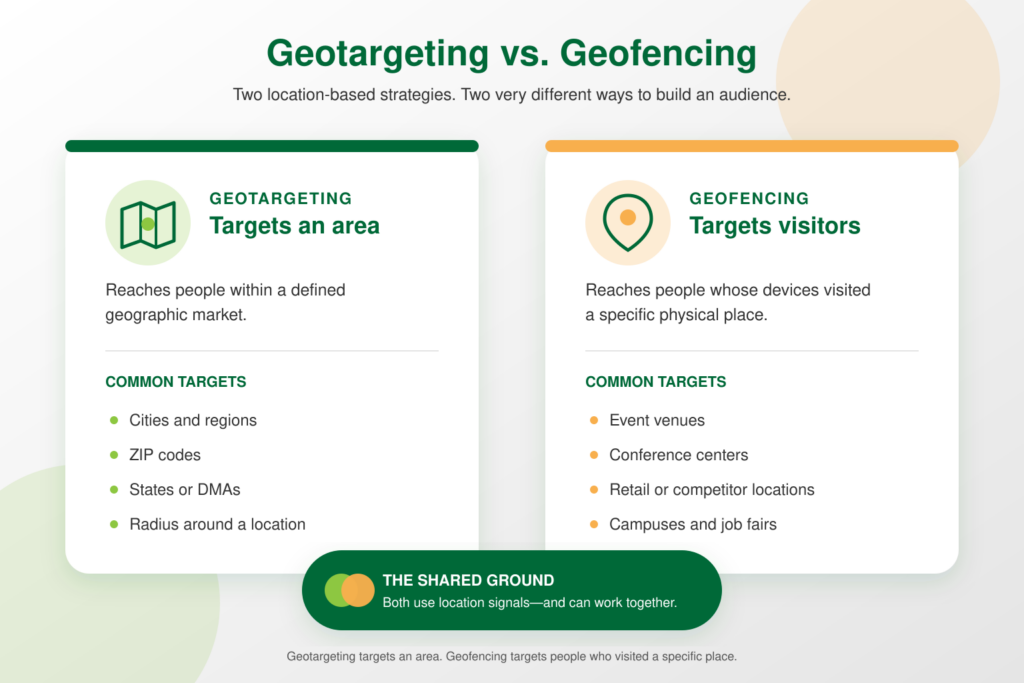
Geotargeting targets an area. Geofencing targets people who visited a specific place.
Understanding that difference can help marketers choose the right approach for their goals and ensure their media strategy, budget, and campaign setup are aligned from the start.
Geotargeting allows advertisers to serve ads to people within a defined geographic area. That area may be a city, ZIP code, region, state, or radius surrounding a particular location.
Think of the location settings in Google Ads or Meta Ads: when you set up a campaign and choose to target “Norfolk, VA” or “within 25 miles of downtown,” that’s geotargeting. You’re not tracking individual visitors — you’re simply telling the platform, “show my ads to anyone in this area.”
For example, a tourism organization might use geotargeting to promote a destination to potential visitors living within a few hours’ drive. An employer could focus recruitment advertising on communities within commuting distance of its workplace. A local business might reach consumers who live within a set radius of its storefront.
Geotargeting is often a strong fit when the audience is defined by where people live, work, or are currently located. It can help advertisers:
Rather than attempting to reach one exact group of visitors, geotargeting provides broader coverage within a strategically selected market.
Geofencing takes a more location-specific approach. It uses mobile location data to identify devices that entered a precisely defined physical location, such as an event venue, conference center, retail location, campus, or competitor location.
Those audiences can then receive digital advertising during an eligible campaign window, including for a set period following their visit.
For example, a workforce development organization could build an audience of devices seen at a career fair and continue sharing information about training opportunities afterward. A destination marketing organization might capture an audience from a regional event and later serve ads encouraging those attendees to plan a future visit.
Geofencing may be useful when an audience’s presence at a particular location indicates a relevant interest, behavior, or connection. It can help advertisers:
Because the strategy depends on specific locations and audience volume, geofencing typically requires more upfront research and planning than broad geographic targeting.
The best option depends on who you want to reach and what their location tells you.
If the goal is to reach people throughout a city, ZIP code, region, or radius, geotargeting is likely the better fit. If the goal is to reach people based on a visit to a particular venue or location, geofencing may be more appropriate.
Consider these questions when developing your campaign:
It’s important to understand that geotargeting and geofencing typically run through different advertising channels. Geotargeting is usually a built-in setting on platforms like Google Ads or Meta Ads. You simply select the area you want to reach. Geofencing generally requires a separate platform with access to mobile location data, since it identifies specific devices that physically visited a location rather than targeting an area on a map.
Because of that, the strongest media plan often uses both, not as a single sliding scale from broad to narrow, but as two complementary tools working together. A campaign could use geotargeting to build broad awareness across priority markets while using geofencing to connect with a smaller, high-interest audience that attended a relevant event or visited a specific location.
The difference between geotargeting and geofencing is more than semantics. Each approach requires a different campaign setup, research process, budget, and strategic recommendation.
Clearly defining the intended audience at the beginning of the planning process allows your media strategists to evaluate the right opportunities and build a campaign around the organization’s actual goals.
Whether you want to reach a broad regional audience or reconnect with people who visited a specific place, Qantm can help determine which location-based strategy makes the most sense for your campaign.
Written by Lori Aitkenhead and Lauren Clark